You are being redirected - hold on tight!

Showing posts with label dvd review. Show all posts

Tuesday, August 5, 2008

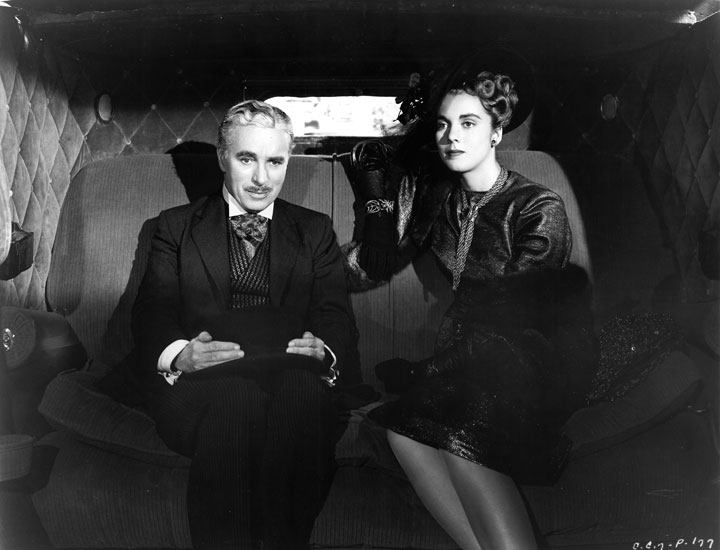
Movie Review: Chaplin Kills 'em in Monsieur Verdoux


Review by Noah Mallin

The story goes that the idea for Monsieur Verdoux, based on a real case, was given to Charlie Chaplin by Orson Welles. Chaplin neglected to credit Welles onscreen until after the film’s premiere in 1947 – just in time for an onslaught of negative reviews.

It’s easy to see what reviewers found so unsettling about the film in those immediate years after World War II. Though the meat of the plot is similar in essence to the kind of thing Britain’s Ealing studious turned out to such acclaim in the 50s – The Ladykillers obviously comes to mind, it’s delivered in a sandwich of social criticism that betrays deep cynicism about the war just ended and the many more to come.

This is not the sweet lovable Charlie of his classic work though he’s every bit as good at winning the audiences sympathy even when doing something rotten. So harsh is the ultimate judgment of the film that it contributed greatly to Chaplin’s blacklisting and estrangement from the United States.

Chaplin plays the title character, a former bank clerk now out of work thanks to the beginnings of the great depression. Unable to find work to support his crippled wife and young child he falls back on his charming way with women, older women of some means in particular. He then fleeces them for their money, usually dispatching them to the great beyond once his goal is achieved. He does a great bit of business throughout the film as he counts the money he gets from his victims, fingers whirring through the stacks of francs as only a bank clerk’s could.

That this is all quite funny is a testament to how great a comedian Chaplin is. His lilting voice, fastidious mustache (here long and thin- he’s no longer the little tramp) and trim compact frame are a constant contrast to his older, often larger marks. A hint of the social commentary to come is in his nonchalant use of an incinerator at the start of the film to hide the evidence of one of his victims – a queasy echo of the Nazi’s atrocities.

Of course complications begin to crop up – the police begin to catch on but more importantly a young Martha Raye is Charlie’s nest intended and she just won’t help him out at ll. Unlike his other victims she’s brassy and crude and less likely to take all her money out of the bank just because he tells her there’s a panic. Steve Martin’s interpretation of Inspector Clouseau in the execrable Pink Panther remake owes much to Chaplin's Verdoux, just as the loud brashness of Bette Midler finds some of it's genesis in Raye’s perf.

Chaplin discovery Marilyn Nash shows up halfway through the film and again at the end and there’s more heat with these two than with the token scenes with Verdoux’s family. Nash is utterly adorable in her floppy hat and hand me down clothes and gorgeously elegant in her limousine at the end. Chaplin can't seem to help but make eyes at her.

The film does go on a bit too long and the tonal shift into outright social criticism grinds the gears a bit. Chaplin’s insistence that his murders were only the response of a small businessman doing on a small scale what big business did all the time with millions still feels like a contrived excuse. Some things are still better shown than told. It’s a recasting of all we’ve seen in a completely different light. Still it adds an unusual element to the film and stamps it as the work of its genius writer/directer/star -- anyone else would have been told to reign it in. Though the effect is jumbled it still makes this film that much more treasurable - it's unique combination of elements like Verdoux, are irresistible to those that are prone to its charm, sting in the end or not.

Monday, August 4, 2008

Movie Review: Shoot 'Em Up Proves There's Truth in Advertising


Review By Noah Mallin

Clive Owen has a deep honking voice that’s like Alan Rickman with a headcold. In Michael Davis' giddily hyperviolent Shoot ‘Em Up it’s used primarily to deliver the kind of bon mots found in a mid 80s Schwarzenegger vehicle , but no matter. The filmmakers, star, and probably the hair and makeup people are well aware of this. In fact, hyper self-awareness is the hallmark of this film – a cynical discourse about cynicism in which everything save a giant winking eye is deployed as a tipoff that all involved are in on it. On a certain level this is a much more committed spoof on a typical Michael Bay flick starring say, Nicholas Cage, than Team America was.

The set-up is absurdity as meta-narrative, with carrot-munching hitman Owen (resemblance to Bugs Bunny is purely intentional) and lactating hooker (don't ask) Asia Argento (untroubled by much in the way of acting chops) becoming surrogate mum and dad to a baby wanted by an anti-gun Democratic Presidential candidate for it’s life-giving bone-marrow. With me so far?

The pro-gun folks want the baby dead so that they can stop the anti-gun folks from gaining power and they’ve hired a scenery demolishing (in every way) Paul Giametti to lead an endless serious of counter-hitmen against baby and quasi –parental units.

The filmmakers fully revel in the incongruity of an ultra violent Hong Kong style shootout flick which purports to be in favor of gun control. It helps that the pacing and editing keep everything moving at a good, ahem, clip, so just as you’re saying “Oh, C’mon!” Another absurdly balletic feat of pistolry unfolds before your eyes. Unlike a typical Jerry Bruckheimer/ Michael Bay crapfest it’s also possible to discern who is shooting who and where in every scene.

As the setpieces mount (an aerial sequence with parachute wearing assassins is one of several highlights, as is a demonstration of the proper time to unbuckle your seatbelt in a collision) so does admiration for the sheer balls it takes to see this giddy farce through to its conclusion.

Tonally there is a sweet tang of mid 80s b-movies such as John Carpenter’s They Live or The Hidden – the sweet smirk of over the top silliness primed with low-budget violence. There are knowing references to other cinematic gunslingers throughout – from Eastwood to Tarantino to John Woo – for cinephiles who are tuned in to that sort of thing. The scene where Owen tenderly explains the workings and parts of a pistol to the delighted infant is a hoot. So are the constant musings on whether guns are phallic substitutes and other stuff usually left to undergrad classes with titles like “Sam Peckinpah and Impotence: The Gun in Cinema.”This is without even venturing into the love scene that is punctuated with multiple gunshot wounds to the baddies.

This is not a film for the masses but if you’re the sort that chuckles at a gratuitous extra spurt of fake blood or the sight of a stairwell full of endless thugs in suits dutifully running upstairs to hit their target (not the only time this film brings to mind the Fistful of Yen sequence in Kentucky Fried Movie) this ones for you.

Movie Review: Stranger Than Fiction - Not So Much


Review by Noah Mallin

Film rarely does justice to literature. Stranger Than Fiction gives it a go and it’s a pleasant, even warm experience in the hands of a fine cast and competent director Marc Forster. What it fails to do is to thrill with the possibility of the written page or indeed the moving picture.

Some critics dismissed this film as Charlie Kaufman lite and it’s easy to see how they came to that conclusion. The set-up – a boring IRS auditor begins to hear his innermost thoughts and his everyday actions narrated by a British woman’s voice who eventually reveals his impending doom – is right up Kaufman’s alley.

The difference is that Kaufman, as in Adaptation, is compulsive about exploring every nook and cranny of implication embedded in his high-concept screenplays – something screenwriter Zach Helm resolutely doesn’t do. To be fair this may never have been their intention – much of the film’s pleasure is in spending time with the cast, giving it an endearing hangout flick quality. To make this work the shaggy dog nature of the story ought to come to the fore as in David O. Russell’s similarly absurdist I Heart Huckabees. Forster takes his premise deadly seriously though, which leaves us with yet another Hollywood film that lectures us on the Importance of Living.

Will Ferrell is curiously button-eyed and doughy as the numbers obsessed auditor – he’s like a glum teddybear. The movie throws him cupid-lipped, tattooed, be-dimpled Maggie Gyllenhaal at her most appealingly fierce and goofbally as his love interest, a baker who refuses to give the government tax money for things she doesn’t believe in. There are a few warm sparks of repartee between these to but the film never gives them the space to get that fire going in a satisfying way. Having thrown them together there just isn’t enough for them to do in the weak screenplay.

Dustin Hoffman has become the go-to guy for off-kilter wisdom of the elders and he comes through as the literature prof recommended by hilariously prim shrink Linda Hunt. Hoffman is terrific to watch, his scenes with Ferrel have a satisfying crackle that never seems to find a place anywhere else in the film. Again a rhythm is established but it gets lost between the plot machinations.

Less successfully is the teaming between Emma Thompson – wonderfully twitchy and tetchy as the author of the book in which Ferrel’s Harold resides – and Queen Latifah as some kind of assistant that feels more like a storytelling device than an actual character.

Forster is still too polished and Hollywood a director to find the weirdness underlying much of the material here. His illustration of Harold’s number mania is cute but also overly familiar – Fight Club and A Beautiful Mind were here first. More importantly, it’s a fussy bit of business that adds nothing to the film – the money and time spent on the effects would have been better used on a third draft of the screenplay. The big emotions that the characters finally reveal feel unearned – especially Thompson's. There isn’t enough struggle against fate from Ferrel (oh to see Spike Jonze at work with this) and Gyllenhaal brings tons of heart to a role that remains resolutely more idea than character.

Still, Stranger Than Fiction is a pleasant enough diversion, nowhere near as serious as it would like to be but not a disastrous mess either. As a trifle it does in a pinch, too bad the title is a tease. A little more strangeness would have done a world of good.

Tuesday, July 29, 2008

DVD Review: The Savages -- More Flight Than Bite


Review by Noah Mallin


Tamara Jenkins made the charming Slums of Beverly Hills ten years ago – a film that kind of sank without a trace despite some fine performances that include one of Marisa Tomei’s best turns and a typically solid Alan Arkin. Cut to last year and her long awaited follow-up film, the considerably more noticed The Savages. Like Slums, The Savages has an ace cast – could you do any better than Phillip Seymour Hoffman and Laura Linney as siblings? Both films also have strong autobiographical elements so it’s tempting to see the aging father Lenny in The Savages as Arkin’s character in his twilight years, just as the brother and sister duo in her first film have grown to internalize the nomadic dislocations of their childhood.

There is a tonal difference between the two films that is appropriate to the time that’s passed for both the characters and the director. While the travails of a teenage girl in the 70s growing up in a dysfunctional family run by a big-talking loser is played for sweetness, pathos, laughs and a tinge of nostalgia in Slums, the story of two emotionally stunted siblings in the present day dealing with the dilemma of what to do when they have to take care of their rapidly declining father who didn’t take care of them as children is melancholic if sometimes bitterly funny.

The sibling's names - John and Wendy - have a fitting Peter Pan feel and in each of their own ways they live in a neverland of stunted emotions and lives. Though this lacks the acuity of a film like Linney-starrer You Can Count on Me which tackled similar brother-sister issues, the real dilemma of what to do about a parent who not only can't take care of themselves but who weren't there for their kids way back when cuts deep.

It's a sometimes touching film that finds most of it's pleasures in the interplay between the two stars. What undermines it a bit is the episodic nature of the story and an ending that comes off as a bit too pat and unearned. Yet we do come to feel for these two screwed up adults, and laugh with and at them. The Savages is a less than perfect film but like the nursing home they settle on for dear old Dad it has it's own comforts -- if just the enjoyment of seeing Linney goof on Hoffman's ridiculous neckbrace or Hoffman's icy response to Linney's married boyfriend.

So, not a classic and it is a bit of a downer but it's also nice to see an American film that savors the small bits of real life rather than explosions and jump cuts.

Wednesday, July 2, 2008

DVD Review: Fuller's Fulfilling First Films


Review by Noah Mallin

I've been on a Sam Fuller kick lately, partly from being engrossed in his lively autobiography. This underrated American director has a thriving cult and I suppose I can be counted as a member. You could do worse as an introduction than Eclipse's The First Films of Sam Fuller, out now on DVD.

The budget priced set consists of his first three films (duh) and like many multi-film sets the overall quality varies. None of the three are stinkers but only one is a mind-blowing lost classic. Let's dispatch with the others first.

I Shot Jesse James (1949) is a fine debut for the novelist soldier turned screenwriter/director. The relation to real life history is Hollywood scant as John Ireland plays Robert Ford as a petulant lovesick asshole and Reed Hadley plays a Jesse James full of backslapping bonhomie. The titular shooting takes a backseat to the rivalry between he and prospector turned sheriff John Kelley for a lady singer. There are several good scenes here, like Ford taking part in a staged re-enactment of the shooting in a rapt theater full of slack-jawed patrons but the pacing is gummy and scenes that are meant to build tension barely skirt unintended humor.

His second film, The Baron of Arizona (1950), is yet another unhistorical history piece and is hampered by a poorly conceived framing device. Vincent Price is the scheming land grabber who creepily finds a young girl, fakes her royal bloodline, and then waits till she's barely old enough to marry her and become the Baron of Arizona. Price is at his hammy best and there are several sequences that find him plumbing the wry humor inherent in going undercover as a Franciscan monk to forge records that are kept in the Abbey. Still, Fuller still hasn't caught the fine art of pacing.

It's on his third film, The Steel Helmet (1951), that his genius emerges from the very first shot of Sgt. Zack emerging from a field of dead bodies. It's no accident that this is the film of the three that is clearly drawn on Fuller's own harrowing experiences in World War II, experiences he would bring to The Big Red One which made my list of the best war movies ever. The Steel Helmet could easily find a berth on that list. Set during the then-current Korean War, this is a brutal unsentimental anti-war film that never stoops to preaching. It also happens to rip the guts out of the rampant racial prejudice that existed in the first war in which American troops were fully integrated. The scene in which a captured North Korean tries to turn a Japanese-American and a black soldier against their own country is incendiary stuff indeed for 1951 -- neither American soldier can dispute the facts of racism at home, even as they love what America stands for.

At the heart of The Steel Helmet is the relationship between gruff cigar-chomping Sgt. Zack and a young South Korean boy he nicknames Short Round. No this isn't the prequel to Indiana Jones and the Temple of Doom but you can see what inspired Spielberg and Lucas with this pairing and how woefully inept they were at creating the same chemistry in their 80s homage. This Short Round may correct Zack by saying "I'm not a gook, I'm a South Korean!" but the vet still throws the kid down to the ground several times when the enemy fire starts to the immortal line "Eat rice kid!" The unknown actor Gene Evans, who plays Zack, is magnificent and utterly believable as the seasoned war weary dogface.

The gorgeous black and white cinematography by Ernest Miller and a strong ensemble cast all do their part to make this a bleakly exhilarating film from beginning to end, a must see. Eclipse is Criteron's no-frills budget line so aside from a pristine transfer their aren't many extras, not that you need them. At the affordable list price, consider the first two films as the extra and spring for The Steel Helmet.

Monday, March 31, 2008

Film Review: Amazing Dr. Clitterhouse Finds The Sweet Spot


Review by Noah Mallin

The title sounds like something from the deep recesses of 70s porn. The Amazing Dr. Clitterhouse is quite another thing entirely. Edward G. Robinson, Humphrey Bogart, and Claire Trevor head the cast of this late 30s dramatic gangster comedy. The three would later end up in the superior Key Largo together directed by Clitterhouse co-writer John Huston.

Unlike Key Largo though this is one of the few gangster pics in which Robinson didn't play a ruthless mug -- that's down to Bogie in a smoldering performance. Instead Robinson is an intellectual doctor with an interest in the physiological effects of criminality. So interested is he that he begins to commit robberies amongst his wealthy friends to study the effect.

While attempting to hock his hot stuff he runs into Claire Trevor, an awfully nice gang queenpin, and gang leader Bogart. Clitterhouse's quick thinking and sharp organizational skills propel him to gang leadership and a place in Trevor's heart, both of which rub Bogie the wrong way.

This is an unusual performance from Robinson, playing an off-kilter upper class man of science. He speaks mellifluously and approaches every situation with calm and reason. Trevor is very good, though after her early scenes she becomes less convincing as a crime overlord. Bogart had played hoods before and was a Warner Brothers go-to guy for the type at this point in his career but the menace and resentment he brings to his role here are first rate.

Some reviewers have knocked Clitterhouse for its mix of comedy and drama and its odd conclusion, which must have been perplexing during the Code-era. I found it to be a great deal of fun, not least of which for the performances. The ambiguity in Dr. Clitterhouse's character is quite modern, fascinated by doing wrong and drawn to it -- for purely academic purposes.

Ultimately there are dark byways of the soul that director Anatole Litvak leaves unexplored, but the light froth that remains is enjoyable in and of itself.

Wednesday, March 12, 2008

Film: Billy Ray's Grasp Exceeds His Reach With Breach


Screenwriter and Director Billy Ray seems to have a thing about the truth. His previous film Shattered Glass looked at the true story of newspaper plagiarist Stephen Glass and his latest, Breach, explores the last few months of freedom for real-life FBI traitor Robert Hanssen. Both films have the same fatal flaw in that Ray is unable to enlighten us as to why these people practice to deceive.

This is exacerbated by the underlying moral tone to the filmmaking -- Ray wants us to know that lying is bad! And yet the main practitioners -- in Breach especially so -- are so much more interesting onscreen than the people whom the audience's sympathies are expected to stay with.

Chris Cooper gives another finely layered performance as Hanssen, a complex man who appeared to love his country with a deep moral fervor, was deeply religious and harshly judgemental of gays, Democrats and women who wear pants. It's a tricky performance , all lizardy eyes and scowling brow. But you also understand how Ryan Philippe's character, tasked with getting dirt on Hanssen, would come to respect him after a time. Anne Archer, as Hanssen's wife, is terrific in the limited screen time she's given, convincing as a sensual deeply spiritual women who perhaps harbors a dark side. I could have watched a whole movie centered on these two, exploring the faces they put on in public and their deeply private contradictions.

Unfortunately Philippe may respect Hanssen but we don't come to respect Philippe, who wears his serious dark hair and level boy scout gaze throughout the film. Too much of the film is spent on his struggle to understand why his superiors want him to investigate this seemingly tight-assed moral guy for pornographic e-mails and his anguish over having to keep his true agenda from his wife. His character is essentially bland and underwritten and Philippe doesn't bring a hell of a lot more to it. It doesn't help that Caroline Dhavernas is so very good in the equally underwritten and cliched role of the wife who doesn't appreciate her husband's secrecy. It's a tiresome cliche to have the goody-goody crimefighter in movie after movie come home to a woman who just doesn't get their goody-goodiness dedication to their job (see American Gangster for an extreme example of this). The movie asks us to celebrate Philippe's resignation from the Bureau as a triumph for truth but in fact it's a cop-out for truthiness.

Laura Linney is on hand as Philippe's superior agent who we are meant to see is a Good Person who has to do Bad Things. She asks callow Philippe if his glimpse into her spouseless catless life is what drove him out of the Agency and though he demurs that's certainly the arithmetic set up by Billy Ray. Philippe essentially resigns because he doesn't ever want to lie to his wife, who is by the film's standards too upstanding to care that it probably would help her not to know what he knows.

Linney's sharp insightful acting rescues what could have been a flat character -- her lines have the force of weariness and resoluteness. Her very aliveness in her role undercuts Philippe's supposed heroism, no matter how hard the screenplay tries to convince us otherwise.

The problem is that it's an inherently unconvincing screenplay. Too often we learn about Hanssen because someone tells us, and then we are given little glimpses over time. In lieu of anything resembling investigation on Philippe's part we get a couple of standard spy scenes of him beating the clock while getting something out of Hanssen's office, or stalling him while others pore over his car. Meanwhile Linney plays the part of Agent Exposition, telling us what we are supposed to take as fact without the film ever showing us and letting it unravel.

This all may be as it played out in real life, but that doesn't mean it makes for a compelling film. Here's the trailer:

Thursday, March 6, 2008

DVD Review: Relive the Golden Age of The Grit-Com with Barney Miller


With the rollout of practically every show that's ever been on television to DVD, there has been a conundrum that's especially endemic to older shows. For many older shows, it took a season to really hit their stride and figure out what they were about and what kind of stories they were telling. Subtle cast changes and behind the scenes shakeups mean that often the first exposure to a show on DVD is not really indicative of what made the program a hit.

So it was with Barney Miller. The show sprang out of a pilot called The Life and Times of Barney Miller and the first season hewed to the initial template -- sensible no-nonsense but sensitive Police Captain Barney Miller and the balance between his family and work life. Though it's a solid and entertaining first run, by the end of the season it became clear that his interaction with his wife (played by Barbara Barrie) and daughter were not nearly as interesting as his co-workers and the revolving cats of crazies that found their ways behind the bars of their Greenwich Village precinct.

Still, since we are by nature an orderly species and most people would prefer to watch a show on DVD in the order of it's run, the powers that be at Sony issued season 1 to test the waters for interest in the program. Not surprisingly, interest was muted in a Season that was atypical and didn't play to the shows evolving strengths.

Four long years have passed until Sony finally has seen fit to release Season 2, now out on DVD, and it's about time. Here is where the classic Barney Miller template is set. Though Barrie is still in the opening credits and shows up a few times the focus is squarely on the precinct house.

Hal Linden, who plays the titular character, is the calm sea of reason in a workplace -- scratch that-- a city full of lunatics. The comic vision of this sane man and his crew inhabiting a crumbling building is an obvious response to the deepening institutional malaise of the mid-70s. There's a wonderful added quality of catch-22 in the fact that Barney typically spends much of his time trying to unbook his prisoners and set them free from the tiny jail cell they call "the cage."

The supporting cast in the early seasons is dominated by the great Abe Vigoda as over-the-hill sardonic Sgt. Fish. Vigoda has an offbeat line delivery that turns clunkers into laughs, his stone face conveying the world weariness of someone who's seen it all and would rather forget. His decaying health and frequency of urination are a constant source of jokes, as is his exasperation with his wife, Bernice. The irony is that Vigoda, who is still alive, is a health nut in real life and was probably in better shape than anyone else on the show.

Ron Glass played Harris, a sharp-dressing intellectual black cop. The desire for a literary career would become more pronounced in later seasons as most often he is paired up with exasperated Puerto Rican cop Chano Amenguale, played by Gregory Sierra. By Season three Sierra would be gone, replaced by diminutive Ron Carey and the superb Steve Landesberg who shows up twice here -- first as a fake priest and later as his soon-to-be regular role of the philosophical, dry Dietrich.

Max Gail as the ex-Marine with the hard-to-pronounce name Wojohowicz ("Just like it's spelled!") , Jack Soo as Japanese-American cop Yemana round out the regulars. Meanwhile a pre-Alice Linda Lavin drops in as a sometime precinct cop and foil for Wojo, Squiggy shows up as a student pot dealer, and the city falls apart.

Watching these episodes on DVD is to immerse yourself in the dark humor of New York's "drop dead" days when the city was running out of money and the federal government refused to help. The reactions of old time cops like Fish and especially James Gregory's great Inspector Lugar to the changing world around them carries as much truth as humor.

Through comedy the show manages to draw sympathetic portraits of all kinds of deviant and what today might be considered ho-hum behavior. Miller is tolerant of gays, some drug use but not pushers, prostitution (the woman selling $60 dollar buttons for the bicentennial is a particular highlight) and mental illness.

Most importantly, the show is generally quite funny and character driven, mostly (though not always) avoiding Very Special Episode syndrome. Here's hoping Sony keeps up the Barney Miller DVDs because as good as Season 2 is, it really gets going in 3, 4, and 5.

Sony typically skimped on any extras so here's a great blooper from Season 3. The cast was working at 3:30 AM, not atypically for a show that was known for it's constant fine-tuning and around the clock shoots.

Tuesday, February 19, 2008

Film Review: Condor Still Soars, Relevant at its Core


Watching Michael Clayton last week gave me a hankering for some of the films that clearly influenced director/screenwriter Tony Gilroy from the 1970s. There's Sidney Lumet and Paddy Chayefsky's Network, one of my all-time faves, but I must have seen that 120 times and can easily replay it in my head at will. Then there is All The President's Men, which just happened to be on cable and which duly mesmerized me once again for the final 20 minutes that I caught. It had been years however since I had seen Sydney Pollack's thriller Three Days of the Condor.

Robert Redford must have been having a paranoid few years with Condor coming out in late 1975 and All The President's Men in 1976. In Condor Redford plays a bookish, if hunky, CIA analyst who spends his time with his head in the clouds solving riddles and fitting arcane clues together for his masters at Langley. He and his fellow analysts work at an elegant New York townhouse in quiet academic splendor.

He's roughly jolted into the more "operational" side of things when his entire unit is brutally eliminated. His escape is by chance, even more so once we realize that his work was the likely catalyst for the hits. The film then goes into classic thriller mode at this point as Redford has to figure out who is after him, why, and how to stop them before it's too late.

The similarities with Michael Clayton aren't so much in the plotting. However Condor director Sydney Pollack has a key acting role in Clayton, and both films expertly use New York City locales to ground their action in time and space.

The real kinship though is in the way in which both films subvert the thriller genre. In both, the central character is a highly specialized tool in the machinery of their organization. They are oblivious to the greater ramifications of what they do, in some sense willfully so. When they are shaken out of this stupor by unexpected events they are forced during the course of both films to re-evaluate their choices and come to terms with the fact that their actions had effects beyond their seeming isolation and may have furthered a destructive agenda. For Clayton its his law firm and the corporate power structure it protects, for Redford in Condor it's the CIA.


Max Von Sydow brilliantly plays Joubert in Condor, a methodical cold-blooded assassin. Eventually we are made to see that Joubert is not so different than Redford is at the beginning of the film -- in a state of willful not-knowingness following and executing (literally) orders because that is what his job is. The ramifications don't register because he won't allow them to. Redford might do his job with his mind and Joubert might do his with a gun but the end result is the same.
There are some minor flaws in Three Days of the Condor. The relationship with Faye Dunaway (who is terrific here) feels a bit forced. Granted Redford is bookish but hunky but the romance feels too often like a screenwriter's conceit rather than an organic occurance. That's also true of Redford's occaisional leaps of logic. Granted he's a brilliant analyst but at times he's so far ahead of the audience that its a bit like watching one of those Star Trek episodes where a planet is about to explode or an alien is about to destroy the ship and someone says "What if we tried tritium nitrate crystals? It just might work!" Finally, the Dave Grusin score has aged rather poorly, feeling altogether too cheesy and 70s compared to the many timeless elements of the film. Pollack has always been a sucker for the "contemporary" score -- witness Grusin's hideous songs from Tootsie. The score made me long for the brilliant reserved stateliness of David Shire's work for All The President's Men.

Condor is still eminently watchable despite all this, and devastatingly contemporary. As Redford untangles the various threads of a conspiracy and sews them back together, he finds himself with a metaphorical sweater that Dick Cheney would wear proudly. And it don't say "World Best Grandpa." There is a grim aptness in the many scenes set in and around the then-new World Trade Center for today's audience.

The path of Redford's character, from self-imposed obliviousness to shocked comprehension is very much a reflection of the path many Americans found themselves on in the 1970s. The crimes of the Nixon adminstration had uncovered a stinking governmental cesspool, one that included rogue intelligence agencies and secret Presidential orders. Now, more than twenty-five years later, has anything changed?

Three Days of The Condor gets four out of five Cheneys:


Here's the trailer:

Tuesday, February 12, 2008

DVD Review: Hitchcock Mystery Pillories Complacent Brits With The Lady Vanishes


Lockwood, Whitty, and Redgrave

The Lady Vanishes, out now in a typically top-notch new print with loads of extras on Criterion DVD, contains many of the elements that director Alfred Hitchcock would spin into trademarks in later films. There is suspense and intrigue, the question of identity and reality, spies, trick camera shots, a hint of sexual perversity, even a director's cameo.

Yet for those familiar with his better known American films The Lady Vanishes is first and foremost eminently British. The plot, what there is of it, is woefully hole-y and the central conceit is flimsy. Essentially this is an idea that would be remade later on in films like Bunny Lake is Missing and Flightplan.

Fetching young upper-crusty Brit Margaret Lockwood encounters likable dowager Dame May Whitty after getting clunked on the head. Whitty then disappears on board a train with Lockwood. When Lockwood asks if anyone has seen her she's met with shrugged shoulders and denials.

Later Hitchcock films would have stretched out the delicious suspense of identity loss and confusion but there is never any doubt in The Lady Vanishes that Lockwood is being lied to. One of the implausabilities in the plot is that the deception relies on some of the deniers to go along based on reasons of their own that the bad guys could have no knowledge and little expectation of.

They do reinforce a political subtext, one that was only beginning to find favor in the Britain of 1938 in which the film was released. Among the fellow Brits on the train who initially support the contention that Whitty never existed are two prototypically oblivious gentleman who hilariously represent the Blighty equivalent of the ugly American. "What's going on in England?" They want to know. But it's not the political scene they care about it transpires. Rather they want to know the up to the minute cricket scores.

The other members of the Empire who go along with the scheme for their own selfish reasons are an adulterous politician and his mistress. The craven politician would do anything to avoid being embarrassed with a woman who is not his wife, or to avoid a fight.

Hitchcock is saying that the politicians like Neville Chamberlain, aided by self-absorbed citizens who would rather watch cricket than watch Europe burn, were allowing Nazism to spread. For make no mistake, the unnamed Central European country where the action takes place is a stand-in for fascist Europe.

While this description makes The Lady Vanishes sound terribly portentous, it is in fact a frothy, funny mystery romp. Lockwood matches wits with ethno-musicologist (!) bon vivant Michael Redgrave and their chemistry and fast one-liners are charming. Our two cricket fans, Caldicott and Charter, were so popular that they spawned their own film, included on Criterion's two-disc set.

I did mention the sex. There isn't the deep damaged sexual psyches of Hitchcock masterpieces like Rear Window or Vertigo. Instead there is a comically erotic scene of a bellhop bringing a meal up to Lockwood's hotel room where she and her girlfriends are in various states of provocative undress. This is 1938 so there's nothing that would raise a modern eyebrow and yet the loving, fetishtic photography of the scene and the bellman's obvious distress are powerfully sexy. Then there is a scene much later on, where Redgrave and Lockwood are cornered by one of the chief plotters. As they sit at crotch level a bulge suddenly tents at his waistline beneath his overcoat. Of course it's a gun but it's hard to believe Hitchcock wasn't up to his smirking psychological games here.

Though it isn't a masterpiece on the level of Hitch's best, The Lady Vanishes is quite fun to watch. It's a solid four out of five Neville Chamberlains:


Here's a clip featuring the abovementioned scene of the poor flummoxed bellman surrounded by those devilish young ladies -- naughty! Note Lockwood's position and that of the champagne bottle, careful getting...er...off that table now Maggie.

Monday, November 5, 2007

Film: The Graduate Still at The Top of The Class in 40th Anniv. Edition


Hoffman and Bancroft don't let a table lamp come between them in The Graduate

Just released in a stunningly sharp remastered print on DVD, Mike Nichol’s 1967 film The Graduate cements its place as a classic of American cinema. What most astounds about it is that it could be the product of any number of hot contemporary filmmakers (Wes Anderson, Jonathan Dayton and Valerie Faris). More to the point it would rank as perhaps their best work.

Everything is fully realized from the screenplay co-written by Buck Henry and Calder Willingham to the brilliant cinematography by Robert Surtees to the groundbreaking editing by Sam O’ Steen. The shots are composed masterfully with every bit of framing thought out -- from the famous view through Anne Bancroft's luscious leg to Hoffman dejectedly surrounded by monkeys at the zoo. The montage sequence mid-film is a classic of film technique with the famous juxtaposition of Hoffman climbing onto a raft cut with him climbing atop Bancroft. Individual actors and chunks of scenes are boldly presented in darkness and the deft handling of visual symbolism hits a literal high-water mark in this film.

By all rights the two leads are miscast. Dustin Hoffman was too old at 29 to play 20 year old Benjamin Braddock, not to mention too swarthy for a character originally conceived as a typically Californian “surfboard”. Anne Bancroft was too young to play proto-cougar Mrs. Robinson, being only 6 years older than Hoffman. Yet the sheer force of their remarkable acting makes their characters work just as beautiful Katharine Ross finds depth and substance in a comparatively underwritten role. Bancroft almost overpowers the film as she finds deep layers into a character that could have remained comically one-dimensional.

At the time, The Graduate seemed like a clarion call to disaffected 60s youth, a kindred spirit to all the Holden Caulfields and complaining Portnoys who had seen the adult world they were expected to live in and found it sorely wanting. The basic themes still resonate and the timelessness of Hoffman’s ennui keep the film feeling fresh, as does an underlying subversiveness that upends the expectations inherent in every scene.

The 40th Anniversary Edition has several redundant featurettes and commentary from the cast and Director Mike Nichols. The second disc is particularly silly consisting as it does of a mere four Simon and Garfunkel songs from the acclaimed soundtrack. Still priced as a single disc this is a must have for any serious film collection on DVD.

The Graduate gets five out of five cougars:

Tuesday, October 16, 2007

Film: Flags Of Our Fathers Fails to Reach The Summit


Adam Beach salutes the train station...

Clint Eastwood has had a remarkable career as a director. His most recent set of films is far and away his best set of work and has erased the collective critical memory of clunkers like Absolute Power or The Rookie. He has built up enough clout as an auteur to get Warner Bros. to pony up for two World War II films on the Battle of Iwo Jima, Flags of Our Fathers which explores the American experience and Letters from Iwo Jima which takes the Japanese perspectives. I have yet to see the more praised Japanese version but Flags of Our Fathers comes across as a very skilled and interesting film that is fatally hobbled by an ill-advised framing device.

In essence, the film is told as a flashback Citizen Kane -style, though it takes some time to reveal that the reporter doing the digging is the son of one of our protags. The film starts with his father suffering what looks to be a heart attack before we are flashed back into the action but every once in a while we are bought back forward again as a transition before finally wrapping the film up in the present.

All of this time spent on a poorly-deployed storytelling device would have been better used by adding some depth and dimension to our lead and secondary characters. The actors are game, Ryan Phillipe is the noble doctor, Jesse Bradford is a charming ne'er do well and Adam Beach is a Native American overachiever. What unites them all is their participation in the famous flag raising at Iwo Jima which resulted in what was the most indelible image of the war for most Americans.

Ostensibly this is Phillipe's character's story -- it's his son who does the digging in the wraparound -- but Beach has the more interesting story and the performance he gives steals the film from his co-stars. Centering on Beach's tortured soul would also have helped frame the most interesting aspect to this true story -- the use of the famous photo as a fund-raising and morale tool and the many questions surrounding the "reality" of the photo itself.

This is the real meat of the film. The impressively filmed battle sequences are all meant to contrast the glad-handing and banqueteering the three men were meant to engage in while the rest of their units were still out fighting in the field. Beach -- who never wanted to be pulled away from the fighting -- drinks to escape from the synthetic heroism that's been thrust upon him. He also bears the cross of his Native American heritage in the face of ignorant comments and nicknames (practically everyone calls him "Chief") and continued prejudice in civilian life.

There is a great movie in here trying to get out, but ultimately too much time is spent by Director Eastwood and talented screenwriters Paul Haggis and William Broyles Jr. on things that take us away from the story. The icing on the cake is the cloying sentimentality of the ending sequence which wraps up the framing device but negates the hard-nosed questioning of the meaning of heroism, war and the power of images that should be at the center of the film.

Flags gets 3 out of 5 flags:

Thursday, September 6, 2007

TV/ DVD Review: It's Always Sunny In Philadelphia Shines


Danny DeVito recites lines from Ethan Hawke's poetry to Charlie Day

Basic-Cable channel FX has made a fetish of edgy dramas like The Shield and Rescue Me. Perhaps this has been a detriment to one of the few comedies they've tried, It's Always Sunny in Philadelphia . Despite being one of the funniest shows on television it continues to have a profile lower than the average hour of C-Span. Fox Video has just released Seasons 1 and 2 together on DVD and believe me, now is the time to catch up with this hilarious boundary tweaking program. That way you'll be ready for the third season premiere on FX, Thursday September 13 at 10PM.
Like Curb Your Enthusiasm, Seinfeld, and Arrested Development, It's Always... feels like the humor that comes out of a conversation with close friends, when you push a situation beyond what you would want someone else to overhear. This makes sense since the evil geniuses behind It's Always... are three old friends Rob McElhenny, Charlie Day and Glenn Howerton. The three star in, write and produce every show. They are joined in front of the camera by the very talented Kaitlin Olson, who plays Sweet Dee. For Season 2, the show scored a major coup by bringing Danny DeVito aboard to play Howerton and Olson's father. The cast is impeccable, with perfect timing and delivery. Here's a scene from Season 2:


The DVD has some good extras but only includes snippets from the pilot that was reputed to cost less than $400. You do get to see Olson's audition tape and hear some good behind the scenes info. Overall this is a great way to see a great show, and I highly recommend this set.
Five out of five Philly cheesesteaks: