You are being redirected - hold on tight!

Showing posts with label cars. Show all posts

Thursday, May 29, 2008

Design: Flashback 1968 -- The Best Automotive Designs of 1968

By Noah Mallin

I know haters -- some of you love the design stuff and some of you loath it. Especially the car designs, but hold your noses because here are the best of 1968.

1) Pontiac GTO


Pontiac's 1968 GTO introduced the soft plastic-sheathed "Endura" front end, allowing for a smooth seemingly bumper-free front. This would become crucial for GM styling as federal law toughened bumper standards in the ensuing decade. Though mid-sized at the time, this was a huge car with flowing, tapered lines. Note the pillarless window openings.

2) Dodge Charger

The second generation Charger was a design icon, as well as a Hollywood star appearing in the movie Bulitt and TVs Dukes of Hazzard with a very un-PC Confederate Flag on the roof. Nevertheless with the tunnel style rear window and handsome sculpted lines its easy to see why so many people caught "Dodge fever".


3) Chevrolet Corvette


The radical 1968 Corvette design is synonymous now with hairy chested men wearing aviator sunglasses and polyester sport jackets who wink at "chicks" in the next car over before burning rubber as the light turns green. Is it just me? Chevy kept the basic shape in production until 1983 and every Vette since has paid homage to a design that itself was derived from the sensational mid 60s Mako Shark showcar. The sinuous fenders and pop-up headlamps were the apogee of space-age styling at the time and the simpler unadorned first year models still look terrific.


4) Aston Martin DBS

The DBS saw Astons getting bigger and more Grand Touring oriented, mixing sport and luxury together. Though it's taken longer to become a classic than it's DB predecessors the bluff chiseled exterior is perfectly judged. The body formed the basis of Astons well into the 1980s.


5) Ferrari P6 Concept


Pininfarina has long enjoyed its status as Ferrari's favored design house. The P6 concept was both of its time, particularly in the roof louvers, and a window into future Ferraris. The sculpted side indents would find their way onto models like the 308 in the late 70s and the front end shape was echoed in the Berlinetta Boxer in the early 70s. The smooth wedge shape hinted at the importance aerodynamics would begin to play over the following two decades as well.

6) Ferrai 365 “Daytona”

One of the most popular Ferraris ever, the 365, also known as the Daytona, is a perfect sinuous coupe. The convertible became very hot as a collector car in the 1980s thanks to TV's Miami Vice (which ironically used a cheap replica). This lead to a spate of dingalings chopping the roofs off of the gorgeous coupe to pass them off as factory convertibles. Mores the pity as the coupe is far better looking. The radical plexi-covered front fascia was replaced with more conventional pop-up headlights in the US due to outmoded regulations.


7) Jaguar XJ8
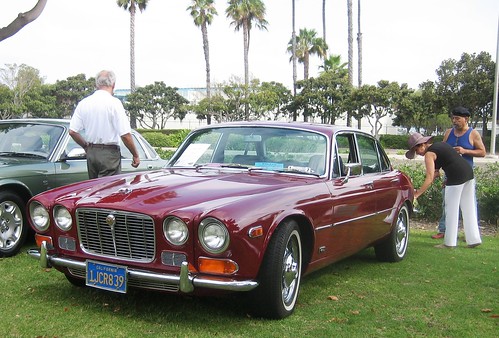
A truly gorgeous machine the XJ6 would stay in production with a few updates through 1986. The flowing bodywork has heavily influenced all subsequent Jaguar sedans for better or worse, but none have captured the elegant simplicity of the original.


8) Lamborghini Espada

Lamborghini could be counted on for original and sometimes oddball styling in the late 60s and this fits both descriptions. A long 2 + 2 that appears even longer thanks to it's low height and planed roofline. The body tucks under radically at the sides, complimenting the side glass angle above.


9) Opel GT


General Motors design was in the last stages of its golden age in the late 60s, not just in the United States but in Europe as well. The GT, made by their German Opel subsidiary was a tiny sport coupe subtly reminiscent of the much bigger Corvette. There are also elements of an aborted mid 60s Pontiac project called the Banshee. The proportions are exquisite, building on their clear Lotus inspiration into something original.


10) Lincoln Continental Mark III

Pimps need cars too. Until the Lincoln Continental Mark III they had to make do with Cadillac's Eldorado. The Mark III however sported then novel "retro" styling, baroque and over the top yet somehow still elegant. It would be a few years before the oval cutout windows would show up in the C-pillars but when they did the pimpmobile was born.


11) Oldsmobile Cutlass


The Cutlass was Olds family car, though the fire breathing 442 model was not to be trifled with. This was the best looking of GM's new intermediate bodied cars for 1968. Long, low and wide, they met the standard for typical Detroit design at the time but added great detailing like the hood and tapered rear deck and headlight clusters.


12) Bertone Carabo

Not to be confused with the awful Phoebe Cates film Princess Caraboo, the Bertone Carabo concept was Italian design at its most radical. Silly yes, but breathtakingly so. Again we have louvers like the comparatively restrained Ferrari P6 concept but here they are all over the rear like the Batmobile in safe mode. The wedge design is the ultimate in edgy and the scissor doors had not yet become cliche.


13) Bizzarini Manta


As you can see, louvers were big stuff in 1968. Design superstar Giorgetto Giugiaro penned his first independent design for this Bizzarini showcar. The wedge was also big but the elements here are handled with a light and deft touch, less in your face then Bertone and not as delicate as Pininfarina's Ferraris.

Monday, April 21, 2008

Breaking News: 200 Chevettes! Timmy at Long Beach Chevrolet has 200 Chevettes -- Drop EVERYTHING!

Seriously, the manchild Timmy has Chevettes 'til 10, which also happens to be his bedtime. He's wearing his big-boy suit too. What? It's 2008? Guess you're too damn late...

Wednesday, February 27, 2008

Design: Pininfarina's Sintesi is Future Fantasy From the Past

Auto show season keeps rolling on with the upcoming Geneva show expected to herald the usual array of production and concept vehicles. Falling squarely into the concept category is famed Italian design house Pininfarina's Sintesi. Pininfarina is famous for it's many iconic Ferrari designs and for it's consultations with Honda among others.

Sintesi is posited as Pininfarina's glimpse into the future as the picture above attests. Still to my eye the emphasis on longer, lower, and wider is a throwback to the design ethos of the 1970s and 80s when aerodynamics became an industry craze. Pininfarina's 1970 Ferrari Modulo is at the extreme of this approach:

As for the merits of the Sintesi design, at first glance what appears to be almost bland and a little bit derivative yields up some very tasty details. The subtle details and converging shapes at the rear flanks are very well handled, as is the indent leading to the lower body side vent. The coupe-like roofline is also notable, along with the huge windshield which seems to have come off of a late-60s Can-Am racer. The front-end opening and the side fender venst seem less harmonious however, and the side glass with its windows-within windows opening also harks back to design studies of the late 70s and early 80s. Also notable are the lovely chamfering around the edges at the front and rear (visible on the picture at the very top of the page).

Why all of these references to 70s and 80s concept design language? Most likely the return to prominence of fuel efficiency as a major issue for global auto manufacturers. The 90s were a time out from escalating fuel prices and in Europe and the United States the evolution of design language towards a lower, longer, "jellybean" like blob began to modify into taller forms like SUV's, crossovers, and tall hatches. Now that fuel prices are back on the rise and countries like the United States are looking again at mandating fuel economy standards, design firms like Pininfarina can be expected to take a second look at these older, more aerodynamic (and thus more fuel efficient as they require less power to move through the air) designs.

Thursday, September 6, 2007

Art and Design: Frankfurt 2007 -- Ford Gets Small

Ford of Europe has been on a design roll of late -- too bad most of these aren't slated for North America. The Ford Kuga is a "near" -production small crossover -- a hot market in Europe. There will probably be some small tweaks here and there before it actually starts rolling out of the factory. Lets hope they don't change too much as the cringeworthy name is the worst thing going for them.


The Kuga has a nearly perfect front end, everything from the shape of the headlights to the integrated small air intakes to the upper and lower grille shapes are well thought-out and detailed. The overall form shapes are perfectly rendered from the shapely wheel openings to the flowing line that extends from above the headlamps to define a front fender, meeting the shoulderline which runs into the taillamps. The roof and greenhouse are a bit BMW-like but are very well proportioned.


Though the lines around the back glass and side quarter windows are aesthetically pleasing, they are bound to create large blindspots for the driver. From the rear the sculpting of the rear hatch and integration of the bumper into the dropped shoulder line can be admired.

Ford is also showing another vehicle which will lead to a related production version -- though in this case the resemblance may be more thematic. Ford's Verve concept is meant to give hints for the shape of their next small Fiesta:


The surfacing is top-notch, particularly the expressive wheel arches and side sculpting. The side glass profile is perfectly echoed in the back glass sweep and the high mounted taillamps avoid cliche. In all likelihood the pillarless sideglass would be the first thing to be modified for production due to cost.

The front view is even more dramatic, with radically tapered headlamps, a tiny mustache like center grille and a large hungry crate-style grille below. The transition of the tapering body line into the front bumper is especially well handled, as is the sweep of the radical rear wheel arch into the lower body. This is good stuff and shows why Ford CEO Alan Mullaly is eager to bring some of this design flair to US Ford products.

Wednesday, September 5, 2007

Arts and Design : Frankfurt 2007 -- Journey Makes Me Stop Believin'

Back to beautiful terrorist-targeted Frankfurt Germany for their major car show and another new design unveiling, the 2009 Dodge Journey. Originally named the "Crew", Dodge's marketing folks seem to have been inspired by the season finale of The Sopranos. Now if only they could whack the designers responsible for this bland entry into the crossover not an SUV and not a car market. Unlike Ford, GM and Nissan's designs, Dodge has taken the safe road and come up with something utterly indistinct.

Other than the toned-down crosshair grille this could be any car company's product. It's not a disaster but Chrysler was on the cutting edge of design not so long ago. The cliched lower body indent that tapers out in the front bumpers, the equally cliched big wheel opening flares (clumsily detailed), the rising shoulder line, the unrelieved slab-like side surfaces all add up to ho-hum. The best thing here is the interesting headlight treatment.

From the rear there is even less distinctiveness, the shoulders below the rear window having been done much more successfully by Mazda among others.

The real disaster zone is the interior which looks like the worst of the 1980's with chintzy chrome trim and unimaginative surfaces thrown together with little thought. The instrument binnacle looks like something out of an '81 K-Car. Chrysler must do better if it expects to survive it's latest crisis.

Tuesday, September 4, 2007

Arts and Design : Frankfurt 2007 -- Jaguar XF

Kicking off our expanded design coverage we have some previews from the upcoming Frankfurt auto show. Frankfurt opens the season with a slew of new cars and concepts, chief among them Jaguar's long-awaited 2009 XF, the replacement for their S-Type.


The good news is that designer Ian Callum has as promised, moved Jag beyond the retro design of the last decade and given them a fresh modern look. The best angle front 3/4 view with some really impressive detailing of the headlights, the sculpted fenders and side intakes, the power bulge on the hood and headlight nacelles. The grille and lower intake design is impressive as well and the car has a nice meaty stance on big wheels and tires.


This view is more problematic: Here we can see the Lexus GS like window treatment at the side, the wheels which are very BMW-esque and the rear end which has some elements around the back wheels that are also 5-series like. On the plus side is the elegantly shaped back window, a Callum hallmark (see the Aston-Martin V8) , the lovely character line that follows the top of the front fenders, below the greenhouse and into a subtle tail kick-up, and the transition from the flared back wheel arches to the wedge cutout at the lower edge of the doors. Overall a very nice design but it doesn't appear to be one for the ages like Jag's 1960's E-Type.